
Warehouses and distribution centers
Warehouse simulation for throughput, staffing and automation
A warehouse or DC is a busy mix of people, equipment, doors and orders that never arrive evenly. A model shows what would happen if you added robots, changed the layout or hit peak volume, before you build it or buy it.
The questions
What a warehouse or DC model answers
Averages hide the hours that matter. A model runs the building shift by shift, with the waves, delays and breakdowns a spreadsheet leaves out.
Throughput
How many orders, cases or pallets the building can move in a day, and which area limits it when volume climbs.
Staffing
How many people each shift needs in receiving, picking, packing and shipping, and where moving a few of them pays off most.
Equipment sizing
How much storage, conveyor, sortation and staging space to buy. Enough to meet the plan, without paying for capacity that sits idle.
Docks and doors
How to schedule inbound and outbound doors so trucks don't wait, staging lanes don't overflow and loads leave on time.
Automation
Robots, AGVs and AS/RS: how many, what layout, and which task rules keep them busy without blocking each other.
Peak season
What happens when volume spikes. Where the backlog builds, how long it takes to clear, and what extra shifts or temporary help buy you.
How we model it
The right tool, your data, and a model people keep using
We are tool agnostic. We have 35+ years of ExtendSim work and 15+ years with Siemens Plant Simulation, and we pick the tool that fits the question and your team. Where the building sits inside a larger network, our own Supply Chain Builder connects it to the plants and customers around it.
We keep the model's data in tables, not buried in the model. Rates, shift patterns, equipment specs and order profiles live in SDI DB, so when the building or the plan changes, you update the data and run again.
When the model becomes a daily tool for planners, we wrap it in a custom application they can run themselves, in the language of their job.
Already have a model?
Too slow, or nobody can run it
Many warehouse models were built for one project and then left alone. If yours takes too long to run or its builder has moved on, we can read it, speed it up or rebuild it.
Model rescueCase: robotic warehouse design
Testing a robotic warehouse before it was built
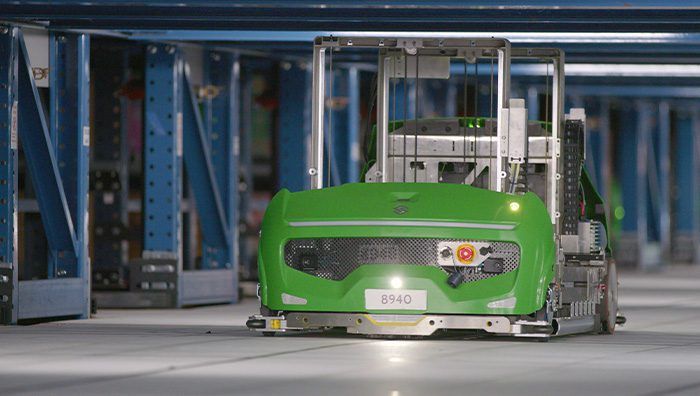
Symbotic was designing its next-generation automated warehouse. We built simulation models and algorithms to diagnose performance issues and to test facility layout, task orchestration, inventory positioning and system balancing across its robotic operations.
The work helped deliver a 94% productivity improvement in multimodal robotic warehousing. The Wall Street Journal later featured the design as the "Warehouse of the Future."
"Their simulation was developed with alacrity and accuracy. The SDI team went above and beyond the project scope, proactively brainstorming ways to make our project better."
J Adam Traina, Director of Operations Research, Symbotic
What the model tested
- Facility layout alternatives
- Task orchestration rules
- Inventory positioning strategies
- Global system balancing across operating modes
- Robot utilization, task completion times and cost trade-offs
Case studies
Warehouse and DC work we can show you
From robots inside one building to what each distribution center should hold and do.
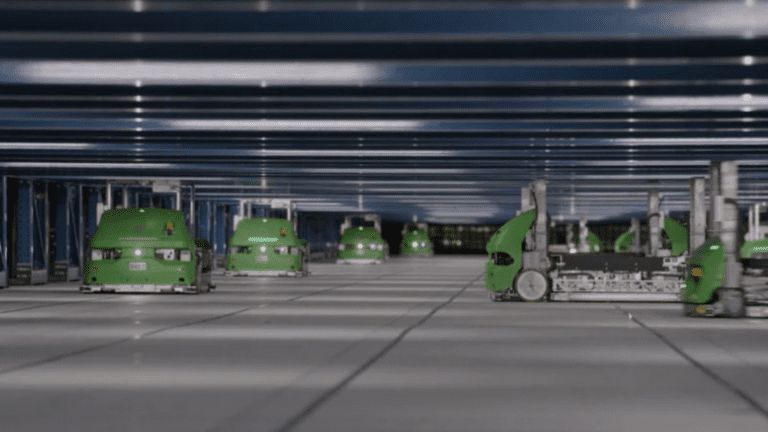
Robotic warehouse design: 94% productivity gain
Testing layouts and task rules for a robotic warehouse before it was built.
94% productivity improvement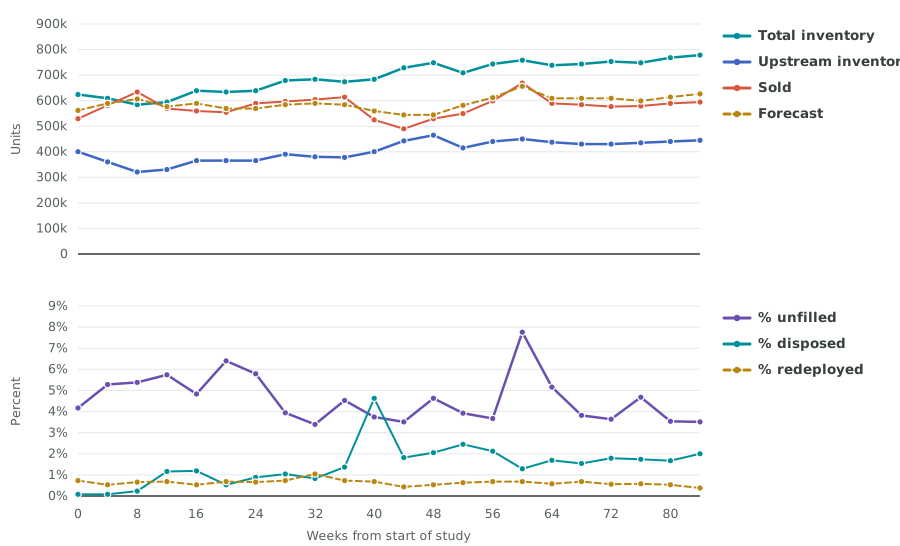
Where to hold cycle stock: plants or DCs
Plants or distribution centers? Testing where cycle stock should sit, item by item.
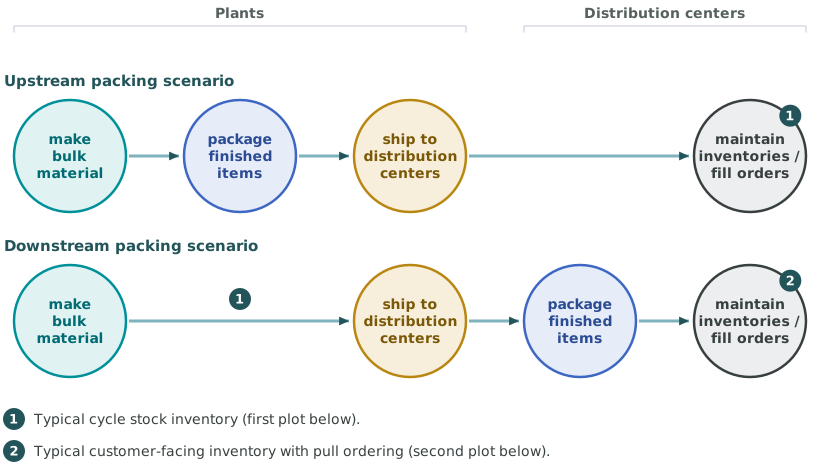
Packing at the DC: inventory vs. bulk stock
Should packaging move to the distribution centers? The answer, product by product.
Tell us your problem
Planning a new building or adding automation?
Tell us about the building, the volume you expect and the decision in front of you. We'll tell you what a model would show.
- A straight answer on whether simulation is the right tool
- Which tool fits, even if it isn't one we use every day
- A rough scope and timeline, before any commitment