
Background
Simulation Dynamics built a simulation model for a U.S. manufacturer of consumer goods to support assessment of alternative inventory deployment and postponement options.
Model Purpose
To assess the pros and cons of moving selected packaging operations downstream to their major distribution centers.
Key model inputs
- Historical forecast and demand
- Production rates by system & product
Key Experiment Factors
- Reordering policy factors
- Categories of product to pack downstream
System Performance Measures
- Total inventories
- Customer order fill rate
- Redeployment cost
- Product disposal cost (aging)
Key Model Issues
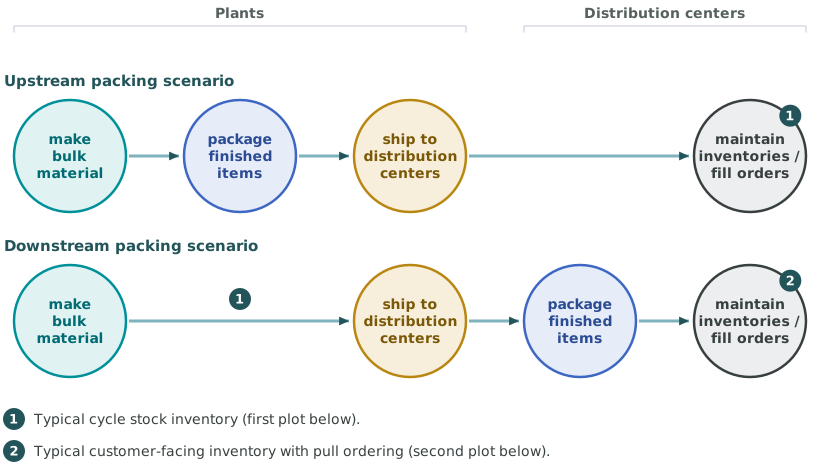
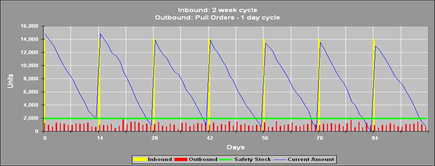
Production cycles of the bulk material at plants may be produced on cycles of 7, 14, 28 or as much as 91 days. When this product is packed at the plant, the result is substantial cycle stock of finished goods. Production runs are immediately allocated to packaging runs of finished items.
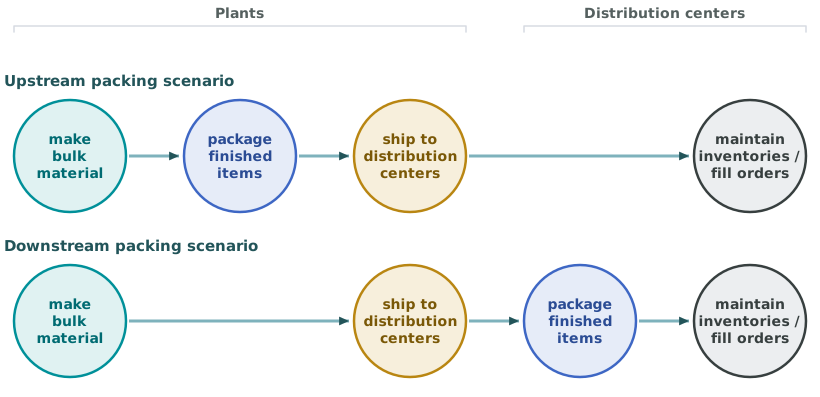
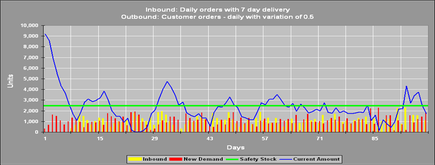
In the downstream packaging scenarios, bulk material is still produced on cycles of 7, 14, 28 or as much as 91 days. Each week, finished goods are packaged based on forecasted demand for the next week at that location. Production runs are held at plants until quantities are pulled to distribution centers for packaging. This approach virtually eliminates cycle stock of finished goods. In exchange, there are inventories of bulk material at each distribution center.
Simulation provided a clear picture of the advantages and disadvantages of downstream packing on a product by product basis.
| Upstream Packing Scenario | Downstream Packing Scenario | |
|---|---|---|
| Pros | No inventories of bulk material - it is converted into finished items at plants as it is produced. | Finished items are packed weekly at distribution centers, minimizing the effects of forecast error. Redeployment of stock between distribution centers is eliminated. |
| Cons | Bulk cycle stock allocated to finished items based on forecast. Substantial misallocation is possible. Finished item cycle stock allocated to distribution centers based on forecast. Misallocation leads to redeployment. | Inventories of bulk material is required at plants and distribution centers, potentially increasing overall inventory costs. |
Plot of Network Activity
Strategic Assessment
The following list provides links to articles within this document that address strategic assessment issues related to this case study:
Postponement
The major focus of this model was to assess the pros and cons of moving packaging of many finished products to regional distribution centers. Moving packaging downstream eliminated redeployment of finished products from DC to DC, and reduced finished goods inventories, while maintaining customer service. New bulk inventories at distribution centers and plants offset the above advantages for many product categories.Safety Stock Design
The baseline safety stock calculation, modified to account for fixed weekly downstream packaging schedules, accurately predicted safety stock requirements at customer facing inventories in this model.Inventory Deployment
A relatively minor issue in this case study was the question of where to deploy cycle stock of the bulk material shipped downstream for packaging. We concluded that it was most cost effective to keep all cycle stock upstream at the plants and fill orders from distribution centers on a pull order basis.