
Background
Symbotic needed to optimize their next-generation automated warehouse design for maximum productivity and efficiency in multimodal robotic warehousing operations.
Model Purpose
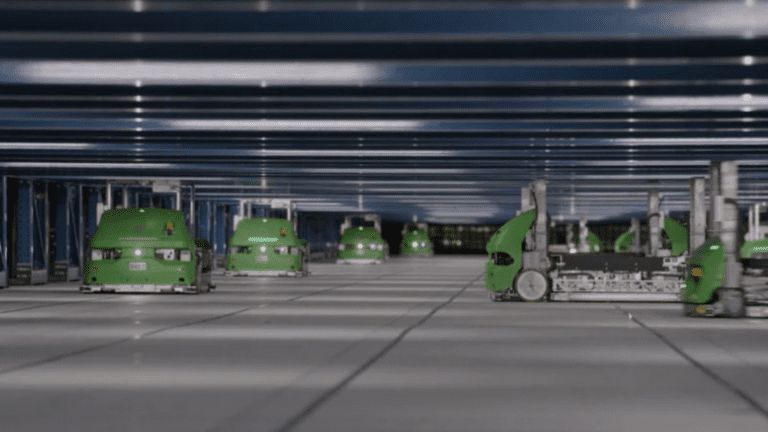
SDI worked with Symbotic to help design their "Warehouse of the Future" through comprehensive simulation modeling and optimization, developing AI algorithms and simulation models.
Key model inputs
- Robotic system specifications and performance parameters
- Facility layout alternatives and constraints
- Task orchestration and inventory positioning strategies
- System balancing requirements across multiple operational modes
Key Experiment Factors
- Facility layout optimization scenarios
- Task orchestration algorithm alternatives
- Inventory positioning strategy evaluation
- Global system balancing approaches
System Performance Measures
- Overall warehouse productivity and throughput
- Robotic system utilization and efficiency
- Task completion times and system responsiveness
- Operational cost and performance trade-offs
Model View
The following video shows this model in action:
Project Results
This collaboration involved developing AI algorithms and simulation models to simulate and diagnose performance issues, optimize global system balancing, facility layout, task orchestration, and inventory positioning.
94% productivity improvement in multimodal robotic warehousing achieved through SDI's simulation expertise
AI algorithms and simulation model development for automated systems
Design optimization for next-generation warehouse automation
Simulation-optimized facility layout enabling breakthrough productivity gains
"Bob and Spencer were excellent simulation engineers. They were careful and thorough with understanding our issues. Their simulation was developed with alacrity and accuracy. The SDI team went above and beyond the project scope, proactively brainstorming ways to make our project better." - J Adam Traina, Director of Operations Research, Symbotic
Industry Recognition
Featured in Wall Street Journal as "Warehouse of the Future" demonstrating the impact of simulation-optimized design on warehouse automation.
Strategic Assessment
The following list provides links to articles within this document that address strategic assessment issues related to this case study:
- Manufacturing: Capacity Analysis
Ability of automated systems to handle projected throughput requirements with validation through simulation modeling. - Resource Management: Long Term Resource Requirements
Assessment of long term resource requirements and operational costs for automated warehouse systems. - Resource Management: Network Capacity
Assessment of the capacity of automated networks to carry specified material flows under various operational scenarios.