
Summary
The Dynamic Ground Segment Model (DGSM) is a custom DES model built as a validation tool. It was used to show that a planned 20-year Delta IV launch program would meet the minimum contract standard of 80% of launches within acceptable limits, including periodic unscheduled launches.
Background
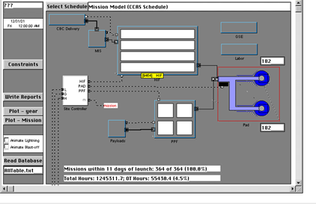
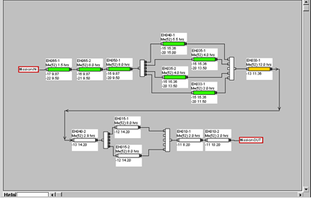
The Department of Defense was choosing a company to launch a new generation of space vehicles. During the final stage of selection, one of the companies decided to build a high-fidelity computer model of every task in the launch vehicle's ground assembly, pad erection and launch sequence. Each individual task would be comprised of the complete set of steps required for completion and the tasks would be performed in exactly the same order as would be followed for an actual launch. The objective was to provide validating proof that the planned tasks and execution sequence would ensure that at least a specified percent of all launches would fall within the specified launch window.
Model Output & Benefits
DGSM wrote custom reports directly to Excel worksheets. Reports included Work Bay trace files of each task completion, regular and overtime labor reports by labor category and a comprehensive launch report showing the scheduled and actual launch date/time for each scheduled launch, including random extra launches.
The model's design and layout could be checked directly against the actual launch sequence documentation. Its output showed that the planned ground assembly and processing sequence would exceed the minimum contract requirements, with a comfortable margin to absorb unplanned launch schedule changes.
Strategic Assessment
These articles on the self-guided tour cover the strategic questions behind this case:
- Long term resource requirements
Delta IV rockets are shipped to Cape Canaveral in parts and are assembled near the launch site. Boeing used this model to assess the tradeoff between the number of specialized fixtures required for assembly and the throughput of assembled rockets.