
Summary
Background
The National Nuclear Security Administration (NNSA) Y-12 National Security Complex is a manufacturing facility operated by BWXT Y-12. Y-12's missions include ensuring the US' nuclear weapons deterrent, storing nuclear materials, and fueling US naval reactors. In order to understand the impacts of these diverse missions on its numerous functional divisions, Y-12 has relied on simulation modeling.
Model Purpose
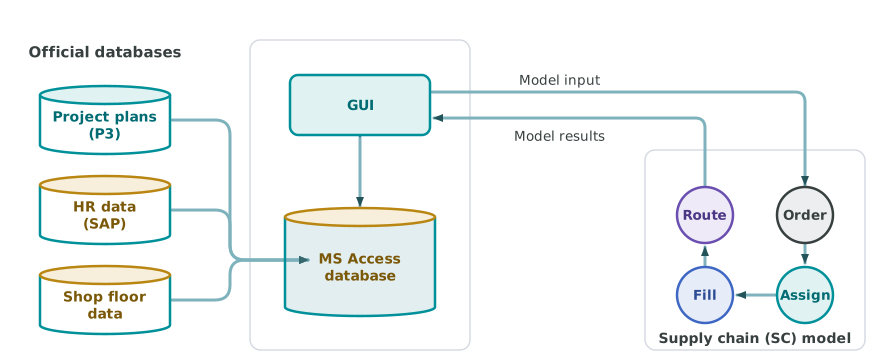
SDI developed the Integrated Resource Planning Model (IRPM), a general purpose simulation model which allows Y-12 wide latitude in describing specific production scenarios through entries in database tables. The two Winter Simulation Conference papers below, written by the Y-12 team, describe the IRPM and the database-driven architecture behind it.
Key model inputs
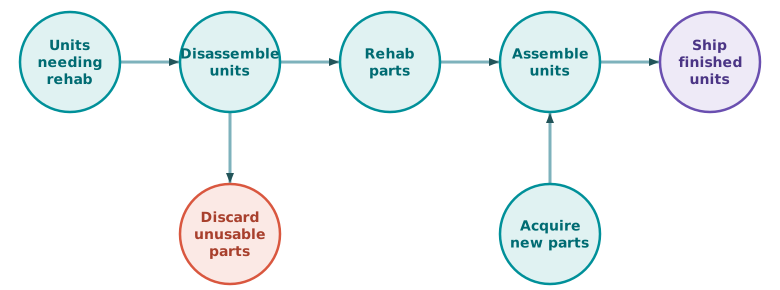
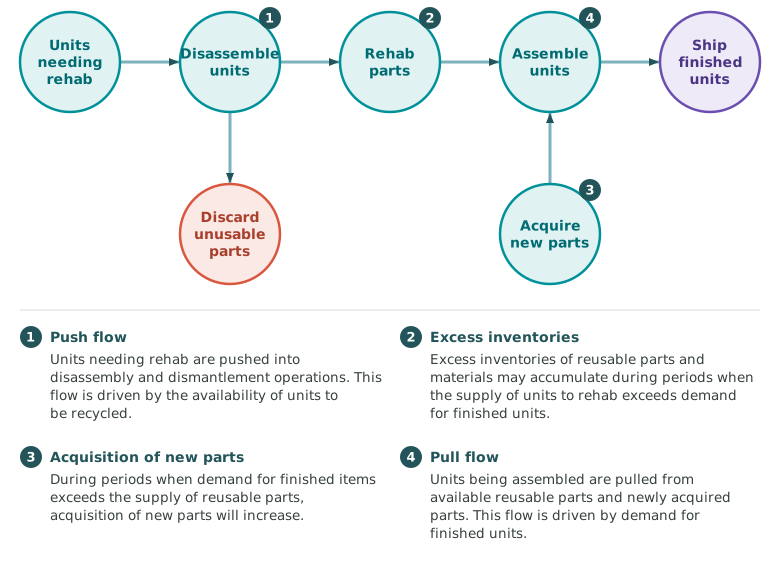
Nuclear weapons requiring rehab are forecasted as an input to the model. Components are sorted into discards, those requiring rehab, and those that can be reused as-is. Finished units are assembled from reusable, rehab and new components. Key inputs are:
- Component processing rates
- Production resource availability
- Percentage of components requiring rehab
Key Experiment Factors
- Resource scenarios
- Processing requirements scenarios
System Performance Measures
- On time delivery
- Resource Utilization
- Inventory levels
Key Model Issues
Model Database
Strategic Assessment
- Long Term resource management
This model is designed to assess resource requirements over a 25-year horizon with a wide range of varying supply and demand scenarios.
Papers
A Supply Chain Paradigm to Model Business Processes at the Y-12 National Security Complex; Kress, R; Dixon, J.; Insalaco, T.; Rinehart, R., 2007 Winter Simulation Conference.
Database-Intensive Process Simulation at the Y-12 National Security Complex; Kress, R.; Bills, K.; Dixon, J.; Rinehart, R., BWXT Y-12, 2006 Winter Simulation Conference. Documents the database-driven architecture behind this model: built in SDI Supply Chain Builder, run entirely from database tables, with no items in the model at all.